Published by Sue Johns-Chapman
Published Date 28.07.2026
Published by Sue Johns-Chapman
Published Date 28.07.2026 
Every year, we say the same thing at the start of awards season: social media moved fast again. But 2026 didn’t just move fast, it moved differently. The channels are still the channels: TikTok, Instagram, LinkedIn, YouTube and the rest, but what’s actually winning attention (and trophies) on them has shifted.
Last year, it was all about the pop-up: the physical-meets-digital activation, the queue round the block, the “you had to be there” moment engineered for a phone screen. So, is that still award-winning? Short answer: yes, but it’s evolved into something bigger. Pop-up culture has fused with something more permanent, drop culture, and it’s just one of seven trends we’re watching as entries open for the next Global Social Media Awards.
1. Participation Is the New Content
For years, “engagement” was something brands measured after the content went live. In 2026, some of the smartest campaigns are building participation into the idea itself.
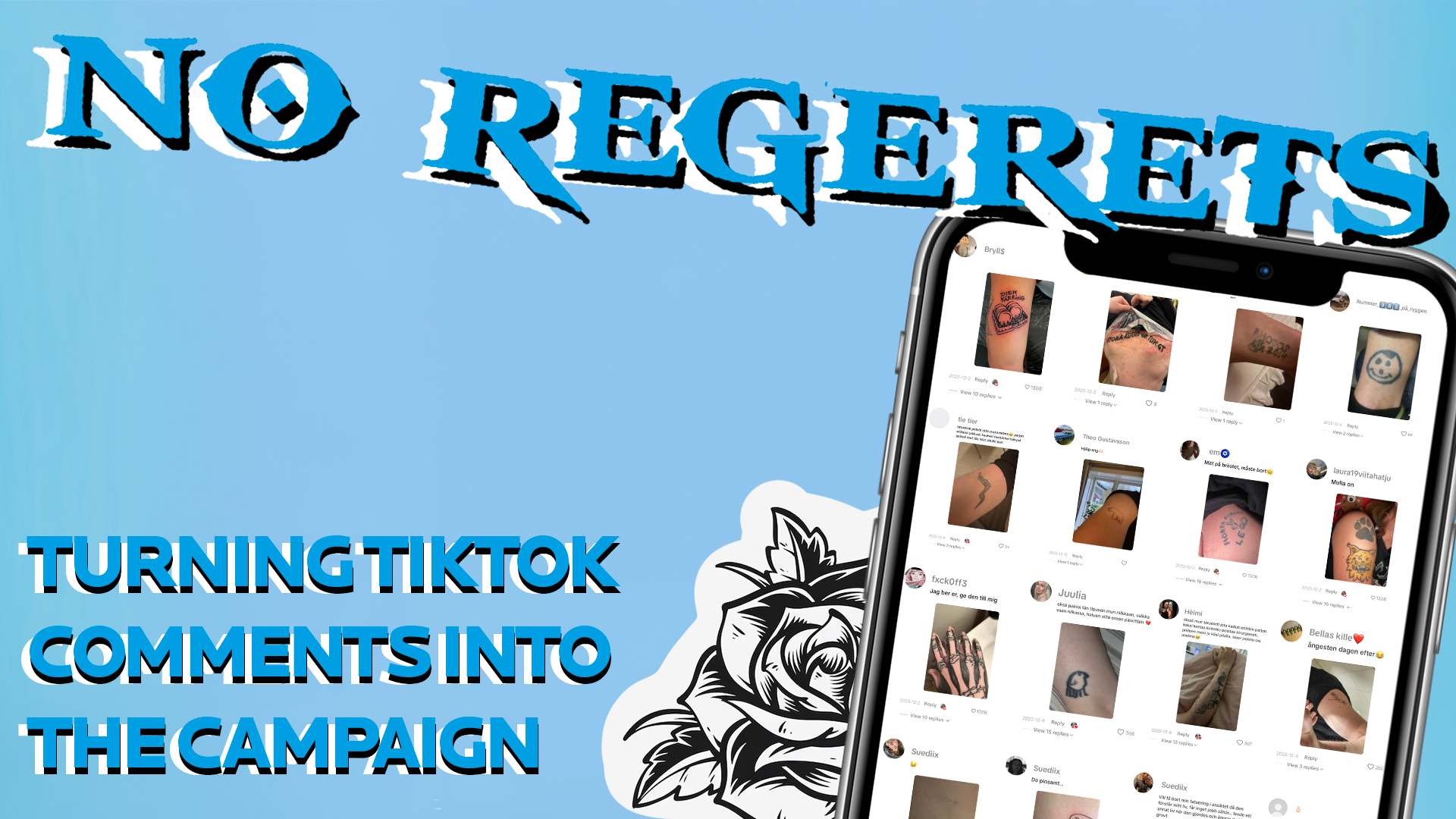
A brilliant example: Cure Media’s shortlisted campaign for La Roche-Posay didn’t just make content about tattoo regret, it invited TikTok audiences to share their own stories and photos directly in the comments. The comments section became the campaign. Creators shifted from storytellers to facilitators, and the audience became co-creators.
This is community depth in action, the industry-wide shift away from chasing follower counts and toward building something people actually want to be part of. If you’re entering Best Audience Engagement Campaign or Best Use of UGC for 2027, ask yourself: does your campaign give people something to do, not just something to watch?
It’s worth pausing here on a question we get asked a lot: what’s the actual difference between UGC, a content creator and an influencer? In short, UGC is content made by your everyday customers and fans, usually unprompted or lightly encouraged, with no formal partnership behind it. A content creator is someone you work with for their craft, their eye, their editing, their ability to make something, regardless of how big their following is. An influencer is someone you partner with specifically because of their audience and the trust that audience places in them. All three can win a campaign, but they call for very different briefs, and they map onto three different categories: Best Use of UGC, Best Collaboration with a Content Creator, and Best Collaboration with an Influencer (plus Best Social Influencer Campaign, for the influencer-led campaign as a whole).
2. Drop Culture Is the New Pop-Up
We have to say, very loudly, that the pop-up isn’t dead. However, it’s changing. Where 2025’s winning formula was often a physical activation built for social sharing, 2026 has been dominated by drop culture: the collectable, the queue, the FOMO-driven release engineered to sell out and get unboxed on camera.
HelloFranses! took home Best Use of Social Media for Retail this year for a campaign built entirely around the Labubu and POP MART phenomenon, proof that collectable mania, when handled with the right cultural fluency, can carry a small agency all the way to a trophy. The lesson for 2027 entrants: the pop-up mentality hasn’t disappeared; it’s just found a new outlet in scarcity, drops and unboxing moments that audiences want to film themselves.
3. Employee Advocacy Taking the Stage
Employee advocacy used to mean asking the marketing team to reshare the company LinkedIn post. Not anymore; data shows sales teams are now the most active participants in advocacy programmes, accounting for roughly a third of all activity. Employee advocacy has become a real growth channel with a lower cost-per-click than paid social and measurably higher trust.
The other shift worth noting is that AI is now widely used to help employees overcome blank-page syndrome, not to write posts wholesale for them. The programmes getting real traction are the ones that keep the employee’s own voice intact rather than turning colleagues into walking billboards. For agencies and in-house teams eyeing the Best Long-Term Strategic Use of Social Media or Best In-House Team categories, a well-structured advocacy programme is increasingly part of that story.
4. Live Shopping Arrives
Live shopping has been “the next big thing” for what feels like five awards seasons running. In 2026, it made its way onto the stage. Live commerce activity has grown sharply year on year; live sessions are converting at rates well above standard ecommerce, and the format has moved on from a novelty stream to something closer to “Live Shopping 2.0” and real-time offers, comment-triggered product demos, and instant checkout are built into the experience.
The brands doing this well aren’t going for slick. Some of the strongest performing live sessions lean into a rougher, more spontaneous energy: answering questions as they come in, mixing up the demo on the fly, creating urgency without forcing it. If you’re entering Best Use of Paid Social or a sector-specific retail category, a genuine live commerce strategy is worth showcasing.
5. Real-Time, Reactive Social Still Wins Big
Big production budgets are impressive. Fast thinking still wins trophies. Havas Hong Kong picked up Best Real Time Response Campaign this year for its work with Hong Kong Football Club, turning a standing start into global buzz through quick, opportunistic content rather than a heavily planned rollout, and it landed a Sports & Fitness silver in the process.
This remains one of the most reliable ways for smaller teams and tighter budgets to compete with bigger agencies: speed, wit and cultural timing beat spend, every time judges see it done well.
6. AI as Craft, Not Just a Content Machine
AI in social media has moved past “can it write my captions” and into genuinely sharper strategic use. Wolfgang Digital’s “Reddit & Weep” work won both Best Use of AI in Social Media and Best Use of Research & Evaluation this year, recognition that came from using AI for real data and audience insight, not just content generation at scale.
That’s the pattern worth entering into for 2027: judges want to see AI used to sharpen strategy and prove impact, not simply to produce more posts, faster.
7. Organic Community Management Is Having a Moment
Organic community management is back in focus. One recent example: nearly a million organic views generated for Currys in a single month, driven not by a big campaign but by consistently showing up in the conversations already happening, real-time listening and response, done as a discipline rather than a one-off.
It’s a good reminder that the fundamentals still matter. A team that knows how to listen and jump into the right conversation at the right moment can outperform a much bigger media spend.
What This Means for Your 2027 Entry
Pulling it together, the throughline across all seven trends is the same: engagement is growing through participation, authenticity (not polish), and creativity and insight. Whether that shows up as a comments section turned campaign, a drop that sold out in minutes, or a live stream that converted because someone answered a question in real time, the common thread is the same, social media that treats its audience as collaborators, not just viewers is what’s performing.
If any of the above sounds like the campaign, tool or team you’ve been building this year, entries for the 2027 Global Social Media Awards are the place to put it.